
Subscribe
From the foraging bee to the human cell, microplastics have woven an invisible and persistent thread through the global food chain. Emerging research reveals that these polystyrene nanoplastics can breach biological barriers and trigger complex cellular damage, including oxidative stress and multiple forms of programmed cell death.
What Are Microplastics?
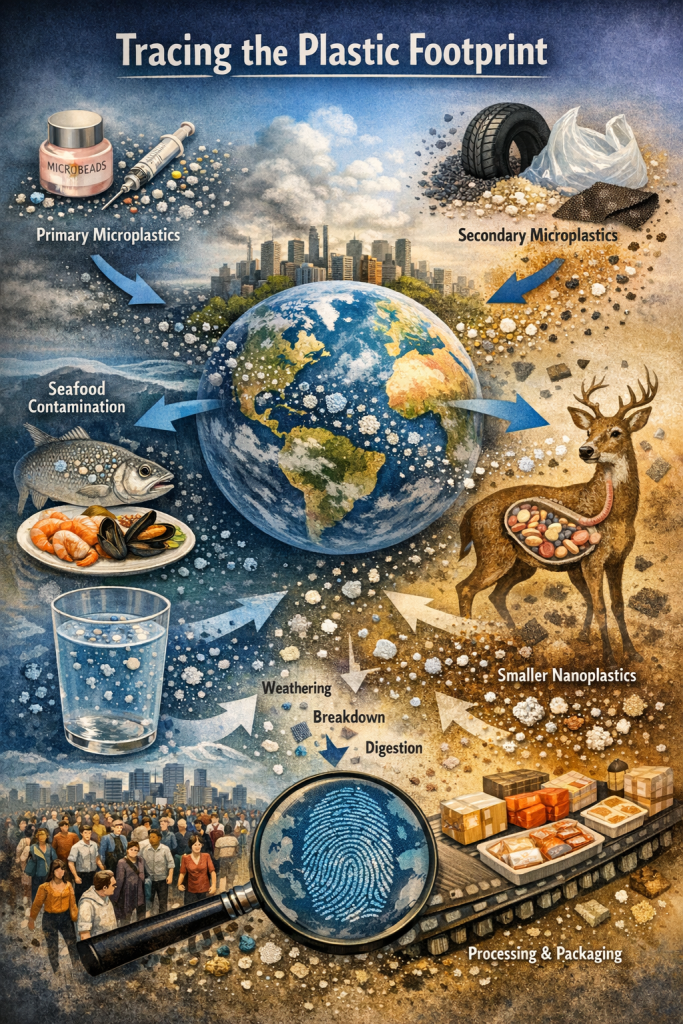
The EPA says primary microplastics are plastics intentionally manufactured in small sizes for their use in consumer products, such as cosmetics or biomedical products. Secondary microplastics are plastic particles that break down from larger plastic materials, such as food wrapping, tires, and synthetic textiles. They are likely to degrade into smaller nanoplastics through chemical weathering processes, mechanical breakdown, and even through the digestive processes of animals. Microplastics are now found in food products worldwide, with seafood and drinking water carrying particularly high loads.
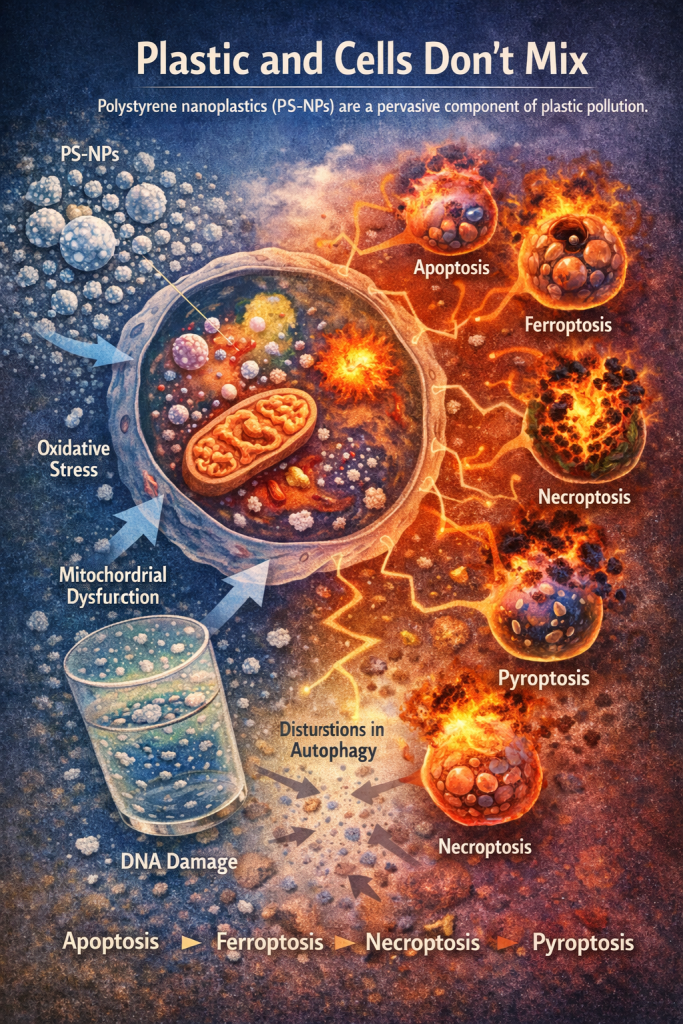
Population size also correlates with microplastic levels—denser human activity leaves heavier plastic fingerprints. Even processing and packaging add contamination, layering this human impact onto natural systems.Polystyrene nanoplastics (PS-NPs) are a pervasive component of plastic pollution. Research has found that their biological effects and mechanisms on cellular systems include oxidative stress, mitochondrial dysfunction, DNA damage, inflammation, and disruptions in autophagy. Notably, PS-NPs induce multiple forms of cell death, including apoptosis, ferroptosis, necroptosis, and pyroptosis, mediated through distinct yet interconnected molecular pathways.
Infiltration
Invisible threads of plastic now drift through the modern world, settling quietly into places once thought pure. From oceans to orchards, microplastics have entered the food chain—subtle, persistent, and global. Even honey, long a symbol of natural abundance, is no longer untouched according to recent research.
The Hive As Witness
Honey does more than sweeten tea; it tells a story. As bees forage across miles of air, soil, and water, they unintentionally sample pollution as they go. And as they consume contaminated nectar and breathe polluted air, traces of that environment are processed and preserved inside the honey they produce. In this way, honey has emerged as an unexpected detector of environmental pollution.
The Picture of Plastic Pollution
Bees, Honey, and Plastic
Under the microscope, most microplastics found in honey appear as blue and colorless fibers. Every 3.3 grams of honey contains roughly one to two microplastic particles, with artisanal honey—floral and exotic— sourced directly from beekeepers showing higher counts. Researchers now use a microplastic pollution load index to quantify this hidden burden.While the hazard from honey alone is small, the broader picture is unsettling.
People ingest thousands of microplastic particles annually. Smaller microplastics may have higher absorption rates, and nanoplastics can accumulate in tissues, where studies suggest they may cause cellular damage. One study found them in the kidneys, liver, and brains of people, and their concentrations were not influenced by age, sex, race/ethnicity, or cause of death. An even greater concentration of them was found in a cohort diagnosed with dementia. Another concern is that microplastics can carry dangerous pathogens and toxic chemical additives.
Sweetness in the Plastic Age
Recommendations in the Plastic Age
Honey reflects the landscapes they come from, pollution included. Sweet as it is, honey reminds us that no corner of the biosphere is truly isolated anymore. The plastic age, it seems, has found its way into the hive.
The Environmental Working Group recommends five ways to reduce your exposure to microplastics: Never use plastic cutting boards, stop drinking from plastic water bottles, use non-plastic food storage containers, avoid using sea-salt, and vacuum, mop, and dust regularly.
A naturally inspired protective biofilm has been discovered to defend the human body against micro- and nanoplastics. Quorum Innovations, a biotechnology company, revealed their product is a biofilm that can bind and expel up to 98% of microplastics from the digestive system and works by reinforcing the body’s natural barrier defenses.